Najdroższe obrazy świata
„Portret Elisabeth Lederer”
Gustav Klimt
Wciśnij „play” i odkryj historię ukrytą w obrazie
Click „play” and discover the story hidden in the image
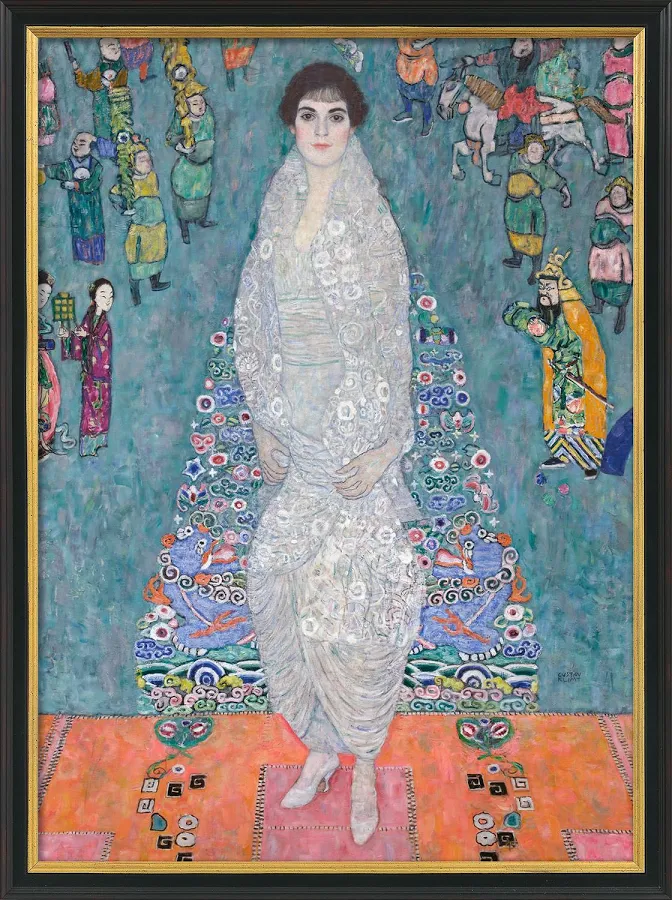
„Portret Elisabeth Lederer”
Gustav Klimt
W 2025 roku ten portret przeszedł do historii rynku sztuki. „Portret Elisabeth Lederer” Gustava Klimta został sprzedany za 236,4 miliona dolarów, ustanawiając rekord aukcyjny dla dzieła sztuki modernistycznej. Jednak jego wartość nie wynika wyłącznie z rekordowej ceny. To także opowieść o jednej z najważniejszych rodzin Wiednia, burzliwych losach XX wieku i dojrzałym stylu jednego z najwybitniejszych malarzy secesji.
Obraz powstawał w latach 1914–1916, w ostatnim okresie twórczości Gustava Klimta. Artysta był wówczas u szczytu swojej kariery i stopniowo odchodził od słynnego „złotego stylu”, który przyniósł mu międzynarodową sławę. Nadal pozostawał czołową postacią wiedeńskiej secesji, ale coraz śmielej eksperymentował z kolorem, ornamentem i bardziej swobodną kompozycją.
Dzieło zostało wykonane techniką olejną na płótnie i ma imponujące wymiary 180,4 na 130,5 centymetra. Przedstawia Elisabeth Lederer, córkę Augusta i Sereny Ledererów – jednych z najważniejszych mecenasów Klimta oraz właścicieli największej prywatnej kolekcji jego prac.
Na obrazie widzimy młodą kobietę stojącą frontalnie na tle niezwykle bogatej dekoracji. Jej twarz i dłonie zostały ukazane realistycznie, z charakterystyczną dla Klimta dbałością o psychologiczny wyraz modelki. Reszta kompozycji zanurza się jednak w świecie ornamentów, wzorów i kolorów. Tło przypomina misterną tkaninę lub dekoracyjną mozaikę, w której można dostrzec inspiracje sztuką japońską i chińską.
Kompozycja opiera się na kontrastach. Spokojna, elegancka postać Elisabeth pozostaje niemal nieruchoma, podczas gdy otaczające ją wzory zdają się pulsować energią. Klimt po raz kolejny zaciera granicę między portretem a dekoracją. Modelka jest jednocześnie realną osobą i częścią ornamentalnego świata stworzonego przez artystę.
Styl obrazu doskonale reprezentuje późny okres twórczości Klimta. Złoto, które dominowało w słynnym „Portrecie Adele Bloch-Bauer I”, ustępuje miejsca intensywnym kolorom i bardziej swobodnym rozwiązaniom formalnym. Widoczne są wpływy secesji, ale także nowoczesnych kierunków artystycznych rozwijających się w Europie na początku XX wieku. Dzięki temu dzieło wydaje się bardziej współczesne niż wcześniejsze portrety artysty.
Obraz ma burzliwe losy. Po aneksji Austrii przez nazistowskie Niemcy dzieło zostało skonfiskowane rodzinie Ledererów wraz z wieloma innymi pracami Klimta. Po zakończeniu II wojny światowej obraz wrócił do spadkobierców, stając się jednym z ważnych symboli odzyskiwania zrabowanych dzieł sztuki.
Przez dziesięciolecia pozostawał w prywatnych rękach i rzadko był pokazywany publicznie. Gdy pojawił się na aukcji w 2025 roku, wzbudził ogromne zainteresowanie kolekcjonerów z całego świata. Cena 236,4 miliona dolarów uczyniła go najdrożej sprzedanym dziełem Gustava Klimta, najdrożej sprzedanym dziełem sztuki nowoczesnej oraz jednym z najcenniejszych obrazów w historii rynku sztuki.
„Portret Elisabeth Lederer” pokazuje Klimta u szczytu artystycznych możliwości. To dzieło, w którym elegancja wiedeńskiej secesji spotyka się z nowoczesnością XX wieku. Jest nie tylko portretem konkretnej osoby, ale także świadectwem epoki, która tuż przed wybuchem wielkich historycznych przemian osiągnęła swój ostatni moment świetności.
„Portrait of Elisabeth Lederer”
Gustav Klimt
In 2025, this portrait made history in the art market. Gustav Klimt’s Portrait of Elisabeth Lederer was sold for 236,400,000 dollars, setting an auction record for a modernist work of art. Its significance, however, extends far beyond its record-breaking price. The painting also tells the story of 1 of Vienna’s most influential families, the turbulent events of the 20 century, and the mature artistic style of 1 of the greatest painters of the Art Nouveau movement.
The portrait was created between 1914 and 1916, during the final phase of Klimt’s career. At the time, the artist was at the peak of his success and was gradually moving away from the famous “Golden Style” that had brought him international recognition. While he remained a leading figure of the Vienna Secession, he increasingly experimented with color, ornamentation, and freer compositional solutions.
Executed in oil on canvas, the work measures an impressive 180.4 by 130.5 centimetres. It depicts Elisabeth Lederer, the daughter of August and Serena Lederer, among Klimt’s most important patrons and owners of the largest private collection of his works.
The painting presents a young woman standing frontally against an extraordinarily rich decorative background. Her face and hands are rendered realistically, demonstrating Klimt’s characteristic attention to the psychological expression of the sitter. The remainder of the composition, however, immerses the viewer in a world of ornaments, patterns, and vibrant colors. The background resembles an intricate textile or decorative mosaic, revealing influences from both Japanese and Chinese art.
The composition is built upon striking contrasts. Elisabeth’s calm and elegant figure remains almost motionless, while the surrounding patterns appear to pulse with energy. Once again, Klimt blurs the boundary between portraiture and decoration. The sitter is simultaneously a real individual and an integral part of the ornamental world created by the artist.
The painting is an outstanding example of Klimt’s late style. The gold that dominated his famous Portrait of Adele Bloch-Bauer the 1st gives way to intense colors and more liberated formal solutions. The influence of Art Nouveau remains evident, yet the work also reflects the modern artistic movements emerging across Europe in the early 20 century. As a result, the portrait feels more contemporary than many of Klimt’s earlier works.
The painting’s history is as remarkable as its artistic qualities. Following the annexation of Austria by Nazi Germany, the work was confiscated from the Lederer family along with many other Klimt paintings. After the end of the 2 World War, it was eventually returned to the heirs, becoming an important symbol of the restitution of looted artworks. For decades, the portrait remained in private hands and was rarely exhibited publicly.
When it appeared at auction in 2025, it attracted enormous interest from collectors around the world. The final price of 236,400,000 dollars made it the most expensive work by Gustav Klimt ever sold, the highest-priced modernist artwork sold at auction, and 1 of the most valuable paintings in the history of the art market.
Portrait of Elisabeth Lederer shows Klimt at the peak of his artistic powers. It is a work in which the elegance of the Vienna Secession meets the modern spirit of the 20 century. More than a portrait of a single individual, it stands as a testament to an era that, just before the outbreak of profound historical upheavals, experienced its final moment of brilliance.